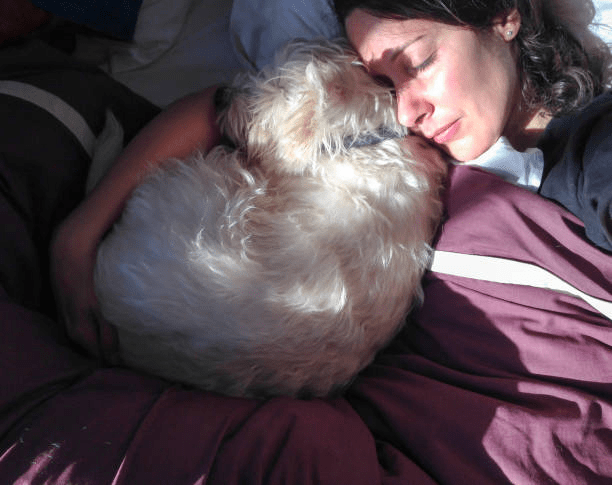
We have all experienced the difference between getting a good night’s sleep, or not. The difference between firing on all pistons with eight hours under your belt, or feeling sluggish, heavy headed, lacking energy, willpower and good humour, having slept less than the optimum amount. More and more research is identifying that a lack of quality sleep goes far beyond how you feel the day after a bad night, and that poor sleep patterns can have serious long term effects on overall health.
The Conclusion in Why We Sleep, by Matthew Walker, is so emphatic on the importance of getting good sleep that I’m going to open this article by including it verbatim:
Conclusion – To Sleep, or Not to Sleep
Within the space of a mere 100 years, human beings have abandoned their biologically mandated need for adequate sleep – one that evolution spent 3,400,000 years perfecting in service of life-support functions. As a result, the decimation of sleep throughout industrialised nations is having a catastrophic impact on our health, our life expectancy, our safety, our productivity and the education of our children…
I believe it is time for us to reclaim our right to a full night of sleep, without embarrassment or the damaging stigma of laziness. In doing so, we can be reunited with that most powerful elixir of wellness and vitality, dispensed through every conceivable biological pathway. Then we may remember what it feels like to be truly awake during the day, infused with the very deepest plenitude of being.
His point is clear that sleep is fundamental to good health! Over the last decade or so sleep research has identified that sleep is even more important than nutrition and exercise. For that reason, I will write a series of articles on different aspects of sleep and the role it plays in our overall health, such as brain health, cardiovascular health, gut health, weight management, mental health, and more. Because a healthy brain is so key to healthy aging, this inaugural sleep blog is posted in Matters of the Mind.
Sleep As We Age
A 2014 study found that the less we sleep as we grow older, the faster our brains age. Matthew Walker assures us that it is a myth that older adults need less sleep. Older adults need just as much sleep as every other age group. However, as you are probably well aware, sleep is more problematic as we age. Two of the key changes in sleep patterns that occur as we age are worth noting.
The first is a reduced quantity and quality of sleep, in particular a reduction in deep sleep. By our mid to late 40’s deep sleep reduces by 60 to 70%, and by the time we reach 70 years old, we’ll have lost 80 to 90% of our youthful deep sleep.
The second change in sleep as we age is more fragmented sleep. In other words, getting up or waking up more frequently throughout the night. The most notable cause of this is a weakened bladder. Due to sleep fragmentation, older adults will suffer a reduction in sleep efficiency, which is defined as the percent of time you’re asleep while in bed.
Studies assessing tens of thousands of older adults have shown that the lower an older individual’s sleep efficiency, the higher their mortality risk, the worse their physical health, the more likely they are to suffer from depression and low energy and the lower their cognitive function, typified by forgetfulness.
Often seniors progress through their later years not fully realizing how degraded their deep sleep quantity and quality have become. They fail to connect their deterioration in health with their deterioration in deep sleep. Matthew Walker suggests that far more age related physical and mental health issues are related to sleep impairment than realized.
The bad news for women is that we typically report poorer quality and more disrupted sleep across various stages of life. Research shows that changes in hormone levels (oestrogen and progesterone) influence sleep quality and a study of women’s health identified that the prevalence of sleep disorders increases with age. Hot flushes and night sweats, frequent waking, insomnia and restless leg syndrome all contribute to poor sleep experienced by peri and postmenopausal women. The challenge for a good night’s sleep is real!
Tips for Improving Sleep
What can you do to improve the quality and effectiveness of your sleep? Here are some tips that Dr Mark Hyman and his panel of experts delivered in an eight week Sleep Master Class, plus some strategies suggested by Ariana Huffington author of The Sleep Revolution and Matthew Walker.
Having a good night’s sleep starts with setting up your day in a way that supports the body’s natural 24 hour clock, known as it’s Circadian Rhythm. Wakefulness and sleep are influenced by the light and dark in a 24 hour period. As dawn approaches, a hormone called adenosine is released to wake up the body. You can send a very clear message to the body that it’s day time by taking a walk outside for 10 to 20 minutes first thing in the morning. This helps to set the Circadian Rhythm for the day. Melatonin is released with the going down of the sun. This hormone signals to the body that sleep is in its future and starts to get the body prepared for sleep. An ideal situation would be to show your eyeballs the sunrise and the sunset, to clearly trigger the release and suppression of these wake and sleep hormones.
Give yourself the opportunity to sleep for 8 hours a night. To achieve this you might need to go to bed earlier and/or set your alarm later, to accommodate not being able to get to sleep or being awake in the middle of the night. Ideally go to bed at the same time every night and wake up at the same time every morning. This supports your circadian rhythm and avoids you suffering something called ‘social jet lag’ – when you shift your sleep-wake cycle without actually going anywhere.
If you need another reason to be physically active daily you can add ‘improved sleep’ to the list of reasons why even the basic recommended guidelines of 150 minutes of moderate exercise per week (that’s only 22 minutes per day) helps you sleep better at night. It doesn’t matter when you do it – morning, noon or night, just do it!
Create a good bedtime routine. The primary purpose of this is to send a clear message to your body that it can start getting ready to sleep. Start your routine with your dinner. It takes two to three hours to digest your food, so make sure you aren’t eating dinner too late and keeping the body busy digesting food while you’re wanting it to be in rest mode.
Next is to adjust the lighting in your house. In this day and age it’s near impossible to eliminate light entirely, but do what you can to turn lights off and dim lighting. Reducing lighting will signal melatonin to be released and conversely too much lighting will suppress melatonin release.
You have no doubt by now heard about ‘blue light’- the light given off by our various electronic devices and which suppresses melatonin and therefor supresses the urge to sleep. There are now various things on the market to block blue light, including glasses. Up to date smart phones have a blue light reduction setting that can be customised to turn off blue light at sunset and on again at sunrise. Similarly, you can download a free computer program called f.lux which adjusts your screen’s colour temperature according to your location and time of day eg at night in turns down blue and turns up yellow.
Say good night to your phone. One of the habits that I’m most proud of creating in 2021 is putting my phone on its charger in my study by 8:30pm every night and closing the door. I don’t look at my phone again until the next morning. (I have an old mobile phone that I use as my alarm in the morning).
Thirty minutes before you’re going to get into bed ramp up your sleep routine to put yourself into a super relaxed state. Again, you’re wanting to send the message to your body that it’s time to get ready to sleep.
Giving yourself a facial, having a shower or bath, reading a book, having a cup of herbal tea, meditating, breath work (4-7-8…breathe in through the nose for 4 counts, hold for 7 counts and breathe out through the mouth for 8 counts). Do whatever it takes to send the message loud and clear to your body that it’s time to sleep. Habit triggers such as brushing your teeth or doing your nightly skin care routine also send a subliminal but clear message that sleep is imminent (don’t forget to keep the lights dim in the bathroom, even while performing these tasks).
If you are going to watch any TV before bed make sure isn’t something that is stressful or anxiety inducing. Don’t watch any news or suspenseful, action packed series that will get your adrenaline pumping in the last half hour before bed. Remember, you want to stay in a restful state.
Keep all screens OUT of your bedroom. It needs to be a sanctuary that invites either sleep or sex, and screen devices inhibit both!
Other things to avoid at night time include an alcoholic nightcap. Contrary to popular belief, an alcoholic beverage does not help you sleep. It may help you get to sleep, but it doesn’t help you stay asleep. You run the risk of making your liver work hard during the night causing your body to rouse out of deep sleep. If you’re someone who struggles to get back to sleep during the night, an alcoholic night cap might be something to cut out. Eliminating alcohol before bed may also assist with snoring, if that’s something keeping you awake at night, because alcohol weakens the throat muscles, making it harder to keep your airwaves open at night.
In addition, be mindful of what you eat and drink during the day, especially the meal and foods consumed in the last few hours of the day. Don’t drink caffeinated beverages from early afternoon. Caffeine can stay in your system for at least six hours and have an impact on how easily you get to sleep. Processed, sugary foods, or large quantities of food can influence the digestive processes at night so as usual the message is to keep it healthy and in moderation.
Tips for Getting Back to Sleep
Many of us don’t have a problem getting to sleep when we go to bed, but struggle to get back to sleep when we wake in the middle of the night. This is especially an issue for older people who need to get up to go to the toilet. Many people think that this is why they wake up, but waking during the night is a natural part of the sleep cycle as we move through deep sleep and light sleep. Here are some strategies that have helped people get back to sleep in the middle of the night:
- Count backwards from 10,000 (it takes a lot of focus to count back from that large number and in focusing on counting you aren’t focused on other thoughts running through your brain).
- Walk through houses you have lived in or that are meaningful to you. This is a particular favourite of mine and is both enjoyable and interesting to see what your mind’s eye recalls of houses you may not have been in for years.
- Perform the same breathing exercises or meditation that help you get to sleep at the beginning of the night.
- Place a sleep mask on your face and put soft ear plugs in your ears. I find this sensory deprivation, coupled with breathing exercises, particularly helpful in getting back to sleep.
- Live in America? The NODPOD comes highly recommended for helping to fall asleep and stay asleep.
Conclusion
Getting a good night’s sleep will reward you on a day to day basis, as well as banking those rewards as you head into old age, and I look forward to sharing more about this essential function of our amazing bodies in future articles.
 Forever Fit and Fun with Jill Andrews